Wordectomy: The Art, Power, and Cultural Meaning
Wordectomy: The Art, Power, and Cultural Meaning

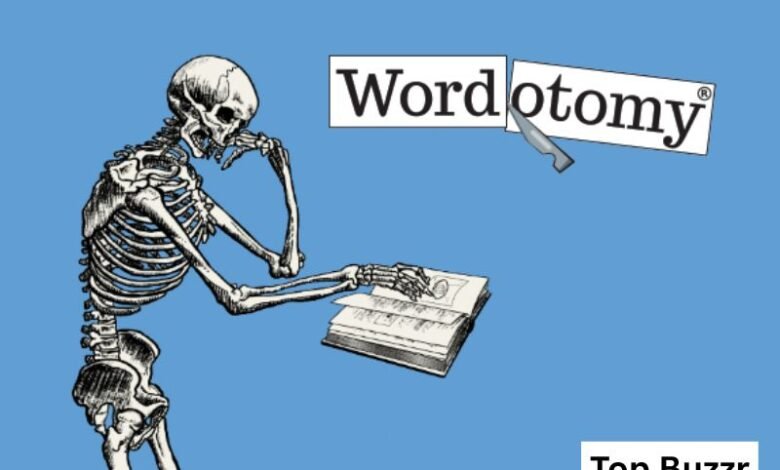
Language has always been one of humanity’s most transformative tools. With a few sentences, an idea can change a generation; with a few words removed, the intention of a message can shift entirely. Within this landscape emerges a striking, metaphorical concept known as wordectomy. It is not a formal academic or medical term but a culturally rooted neologism combining the everyday word “word” with the surgical suffix “-ectomy,” typically used to describe the removal of biological tissue. Wordectomy, therefore, becomes a vivid metaphor: a form of linguistic surgery, intentional or unintentional, in which words are cut away for clarity, persuasion, censorship, manipulation, artistry, or control.
Although not recognized by formal dictionaries, wordectomy has gained popular traction because it captures something essential about the way language is crafted, edited, policed, and reshaped in modern society. It reflects a growing awareness that removing certain words can be just as powerful—sometimes more powerful—than adding them. The act of cutting language can influence perception, identity, authority, and narrative direction, revealing the deep relationship between silence and speech.
This article explores the origins, uses, implications, and cultural significance of the concept of wordectomy. It examines both the practical and philosophical dimensions of removing words, showing how the term captures a phenomenon far bigger than its playful structure might suggest.
Understanding the Concept of Wordectomy
Origins of the Term
Wordectomy arises from a playful yet telling blend of linguistic creativity. The suffix “-ectomy,” familiar from terms like appendectomy or tonsillectomy, refers to surgical removal. When merged with “word,” it paints a highly visual conceptual image: a precise, sometimes drastic extraction of language from a text or conversation. Because editing and censorship can both involve removal, the metaphor resonates in contexts ranging from casual writing to political discourse.
While the word is not formally cited in linguistic textbooks, its structure is intuitive and follows a tradition of metaphorical terms that use medical language to describe non-medical actions. It sits alongside expressions like “verbal surgery,” “textual amputation,” and “trimming the fat,” but stands out because of its satirical sharpness. A wordectomy implies more than editing; it implies cutting with purpose.
Core Meaning and Implications
At its simplest level, wordectomy means removing words. Yet this removal can carry far-reaching implications depending on who performs it, why it is performed, and how the absence of those words affects meaning. Unlike casual editing, wordectomy suggests deliberate action—whether the goal is refinement, simplification, concealment, or ideological shaping.
In a world where language carries political, emotional, and psychological weight, removing a word can alter relationships, public opinion, and personal expression. That is why the term appeals to writers, critics, scholars, and everyday observers who recognize the power behind what is unsaid.
Wordectomy in Writing and Editing
Creative Wordectomy: Making Language Sharper
Writers often face the challenge of expressing ideas with clarity. In this context, wordectomy becomes a stylistic tool used to strengthen prose. Removing cluttered phrases, redundancies, filler words, and unnecessary elaboration can reveal the core message beneath layers of excess. Many celebrated authors advocate for minimalist writing styles that elevate precision and impact through subtraction.
Through this lens, wordectomy is not destructive; it is liberating. It frees the text from noise, allowing the reader to connect with the essential elements of narrative or argument. A single sentence trimmed through careful wordectomy may carry more emotional force than an entire paragraph filled with flowery embellishment.
The practice testifies to the idea that writing is not only an act of adding ideas but also of selectively subtracting them. Wordectomy becomes a discipline that prioritizes intention and meaning.
Structural Wordectomy in Editing Processes
Beyond stylistic refinement, editors use wordectomy to reshape structure. This may involve cutting repetitive themes, removing overwritten dialogue, or eliminating descriptive passages that slow pacing. A strong edit requires the ability to identify what does not belong, even when it is well-written.
Editors often describe this process as both painful and rewarding. Painful because writers may feel attached to their words; rewarding because the final work becomes cleaner, more engaging, and more coherent. Wordectomy, in this sense, becomes a collaborative craft in which the editor acts as a surgeon preserving the health of the text by removing what threatens clarity.
Wordectomy as Censorship and Control
Political Wordectomy
In political environments, word removal becomes far more consequential. Governments, institutions, and campaign strategists often engage in what can be called political wordectomy: the selective elimination of terms that may provoke criticism, spark dissent, or reveal uncomfortable truths. History is filled with examples of altered speeches, redacted reports, and modified public statements.
When certain words are removed from public language—words describing events, identities, injustices, or ideologies—the collective understanding of reality can shift. Political wordectomy can shape national narratives and limit public awareness. Removing a word can erase a problem from conversation without solving it, creating a linguistic illusion of resolution.
This makes wordectomy a potent tool of power. By controlling what is said, institutions also control what can be understood, challenged, or resisted.
Corporate and Media Wordectomy
Businesses and media organizations also participate in wordectomy. Corporate statements often avoid emotionally charged language, replacing it with neutral or ambiguous terms. Layoffs become “restructuring.” Failures become “adjustments.” Mistakes become “oversights.” The removal of specific words softens the impact of events and shields reputations.
Media outlets sometimes select or omit words to shape public reaction. When a term is absent, the frame of the story shifts. Even small changes in vocabulary can influence whether readers perceive an event as dangerous, harmless, justified, tragic, or avoidable.
Thus, wordectomy becomes a subtle form of narrative engineering.
Wordectomy and Digital Culture
Algorithmic Wordectomy
In the age of online platforms, algorithms often determine which words are allowed and which are suppressed. Automated moderation systems perform massive-scale wordectomy by removing posts containing prohibited terms, even when the context is harmless.
This can produce unintended confusion, as discussions about banned topics become difficult to articulate. The digital environment develops workarounds, altered spellings, coded expressions, and symbolic substitutes to avoid algorithmic removal.
The silent force of algorithmic wordectomy affects millions of conversations daily, shaping digital culture from behind the scenes.
Self-Censorship and Internal Wordectomy
With increased awareness of how words may be interpreted, misinterpreted, or policed, individuals often perform internal wordectomies on their own thoughts before expressing them. This self-censorship is widespread in workplaces, schools, online communities, and social interactions.
People remove certain words out of fear of controversy, misunderstanding, or reputational harm. This internal wordectomy may promote caution, but it may also limit creativity and inhibit honest dialogue.
The tension between safety and authenticity becomes central to understanding the psychological dimensions of word removal.
Philosophical and Cultural Dimensions of Wordectomy
What Is Lost When Words Are Removed
Words carry histories, emotions, identities, and stories. Removing them can erase perspectives and silence voices. A wordectomy may streamline a message, but it can also diminish meaning, flatten nuance, and reduce the range of human expression.
The absence of certain words can reshape collective memory. Cultures evolve around the vocabulary they use; when a word disappears, so does a portion of that culture’s expressive potential.
What Is Gained Through Removing Words
Yet wordectomy is not inherently harmful. In many contexts, removing words brings clarity and focus. It prevents misunderstandings, reduces noise, and sharpens communication. A well-executed wordectomy allows ideas to breathe.
Thus, wordectomy embodies a paradox: it can both empower and endanger communication. The value of removing words depends entirely on intention, transparency, and context.
The Future of Wordectomy
The role of wordectomy is likely to expand as communication becomes faster, more digital, and more monitored. Writers will continue using it as a tool of craft; institutions will wield it as a tool of influence; individuals will practice it as a tool of caution.
Artificial intelligence introduces new layers to the concept. As AI systems assist with editing, translation, and content moderation, wordectomy becomes partially automated. Machines may one day perform extremely precise wordectomies, but the ethical implications of such systems remain complex.
In a world where silence can be as meaningful as speech, understanding the mechanics and consequences of removing words becomes essential. Wordectomy teaches us to question not only what is said but also what is deliberately unsaid.
Conclusion
Wordectomy, though informal and metaphorical, captures a powerful truth about the human relationship with language. Words are not merely tools of expression; they are instruments of clarity, persuasion, control, and identity. The act of removing them—whether for artistic, political, or social purposes—can reshape narratives and influence our understanding of the world.
By studying wordectomy, we gain insight into the delicate balance between expression and omission. We recognize that communication is shaped as much by what we choose to eliminate as by what we choose to include. In this way, wordectomy becomes a lens through which we examine our cultural values, our fears, our ambitions, and our shared responsibility to communicate with honesty and intention.
Frequently Asked Questions About Wordectomy
Is wordectomy an official linguistic term?
No. Wordectomy is not recognized in formal dictionaries or academic linguistics. It is an informal metaphor used to describe the deliberate removal of words for editing, censorship, or stylistic improvement.
How is wordectomy different from regular editing?
Regular editing may involve adjusting grammar or reorganizing sentences. Wordectomy specifically emphasizes the removal of words, often in a deliberate, purposeful, or even drastic manner. It conveys a stronger sense of surgical precision.
Can wordectomy be harmful?
Yes, it can be. When used as censorship or manipulation, removing words may distort truth, silence perspectives, or control how information is perceived. The ethics of wordectomy depend on intent and transparency.
Why is wordectomy compared to surgery?
The suffix “-ectomy” suggests surgical removal. This comparison emphasizes the precision and sometimes painful sacrifice involved in cutting words, whether for clarity, persuasion, or concealment.
Does wordectomy occur online?
Frequently. Algorithms, content moderation systems, and social norms all contribute to online wordectomy. Certain words get flagged or removed, influencing how discussions unfold and how users shape their vocabulary.