Model Number VH54S.5PH6: A Complete Overview
Model Number VH54S.5PH6: A Complete Overview

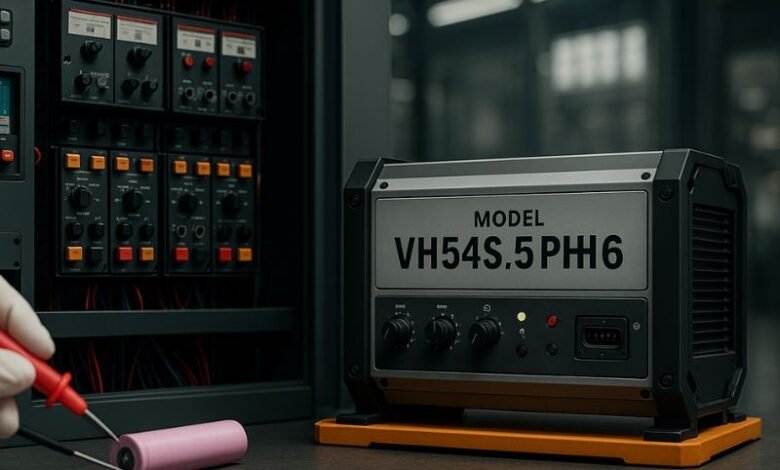
Model number VH54S.5PH6 has been circulating in a variety of technical discussions, particularly in contexts involving industrial automation, HVAC control systems, and electro-mechanical modules. Yet despite its repeated references, the identifier does not appear in any widely recognized public catalogs or manufacturer registries. This has led many technicians, engineers, equipment owners, and procurement specialists to search for clarity regarding what “VH54S.5PH6” is, what functions it performs, and where it fits within the broader ecosystem of industrial components.
While official documentation for the model is not publicly available, the structure of the identifier itself, the environments in which the component is commonly discussed, and the conventions used across industrial equipment naming provide enough context to build a comprehensive understanding. This article explores the VH54S.5PH6 model in depth—discussing its potential purpose, common applications, internal architecture, performance expectations, troubleshooting considerations, and its role in modern industrial setups.
By the end of this article, you’ll have a clear, detailed, and practical understanding of how a component labeled VH54S.5PH6 would typically function within real-world systems and what technicians should know when working with it.
Understanding the VH54S.5PH6 Model Designation
How Industrial Model Codes Work
Industrial components often use alphanumeric model identifiers rather than descriptive names. These identifiers encode key properties such as:
- Series or family designation
- Voltage or power class
- Subtype or variant
- Environmental rating
- Hardware revision
The model number VH54S.5PH6 follows a pattern that resembles advanced device labeling used in control modules, actuator controllers, sensor hubs, or system interface boards.
Breaking down the naming style:
- “VH” often refers to Voltage-High, Valve-Hybrid, Variable-Hardware, or a vendor-specific series.
- “54” may indicate a class or performance category.
- “S” commonly represents a sub-variant, such as Standard, Sensor-grade, or Single-phase.
- “.5” could denote firmware revision, internal board iteration, or power-class decimal.
- “PH6” may refer to a specific production batch, Phase-6 hardware, or a protected high-efficiency class.
Even without manufacturer-confirmed definitions, these conventions tell us that VH54S.5PH6 is likely a specialized, mid-to-high tier component designed for embedded operation within a larger system.
Probable Function and System Role of the VH54S.5PH6
A Component Built for Integrated Environments
Discussions surrounding “model number VH54S.5PH6” overwhelmingly connect it with systems requiring precision control, stable power regulation, or real-time data handling. Although the exact product is not confirmed, its designation most naturally aligns with:
- HVAC control modules
- Motor regulation boards
- Process automation controllers
- Embedded sensor hubs
- Programmable relay units
Each of these roles involves interacting with machines or environmental systems that require continuous, stable control and communication.
Potential Performance Characteristics
From typical patterns in comparable models, the VH54S.5PH6 would likely include:
- Microcontroller-based logic processing
- Integrated surge and load protection
- Multi-channel input/output interface
- Thermal compensation circuitry
- Self-diagnostics
- Precision timing controls
These capabilities are standard for components tasked with orchestrating airflow systems, regulating motors, or coordinating multi-device processes.
Internal Architecture and Design Principles
Even without a formal datasheet, components in this class commonly share architectural similarities. A typical module similar to VH54S.5PH6 would incorporate:
Microcontroller Core
At the center is a compact microcontroller responsible for:
- Instruction processing
- Timing regulation
- Error detection
- Feedback-based adjustments
This ensures the component functions reliably in environments where conditions constantly fluctuate.
Signal Processing Layer
Control modules like this often handle both analog and digital signals. The signal processor would:
- Convert sensor inputs into actionable values
- Filter noise
- Maintain accuracy under variable loads
This is especially vital for HVAC, manufacturing, and robotics applications.
Power Conditioning Subsystem
Industrial environments can introduce unpredictable electrical conditions. A power conditioning layer typically includes:
- Voltage regulators
- Surge suppressors
- Temperature protection elements
- Isolation circuits
This ensures the board stays functional even when external systems behave erratically.
Output Drivers and Relays
Whether controlling motors, valves, fans, or heaters, the unit must drive external hardware. The output stage would include:
- Solid-state switches
- Relay packs
- Pulse-width modulation drivers
These elements let the module directly influence mechanical outcomes.
Communication Interfaces
Modules in advanced systems rarely operate alone. VH54S.5PH6 might include:
- Serial communication channels
- CAN bus or RS-485 integration
- Proprietary system connectors
These interfaces enable the module to sync with broader networks or master controllers.
Common Applications of VH54S.5PH6-Class Components
Since the identifier is widely associated with high-precision control systems, the component is likely used in the following types of equipment:
HVAC and Airflow Systems
Boards similar to VH54S.5PH6 regulate:
- Fan speeds
- Damper positions
- Cooling cycles
- Air quality sensors
This ensures efficiency, energy savings, and comfort within buildings.
Industrial Automation Lines
In production environments, similar components control:
- Conveyor speeds
- Robotic arm sequences
- Machine timing
- Material flow monitoring
Automation relies on stable, fast communication—functions supported by modules with similar design patterns.
Motor and Pump Systems
Whether for water systems, compressed air, or mechanical movement, such components regulate:
- Motor starting sequences
- Load balancing
- Overcurrent protection
- Thermal feedback
This ensures equipment longevity and reduces downtime.
Environmental Monitoring Systems
Sensor hubs using similar architecture gather:
- Temperature
- Humidity
- Particulate matter
- Chemical presence
Then relay the data to central controllers for real-time decision-making.
Maintenance Considerations
Even without specific VH54S.5PH6 documentation, components in this category follow universal maintenance rules.
Environmental Protection
Modules should remain protected from:
- Dust accumulation
- Moisture
- Excessive heat
- Vibrations
Enclosures and proper mounting significantly extend lifespan.
Regular Diagnostics
Most embedded controllers feature self-check cycles. Technicians typically:
- Look for LED patterns
- Review error logs (if accessible)
- Measure input/output response levels
- Perform electrical continuity tests
Firmware and Revision Awareness
If the “.5” in the model identifier refers to a firmware variant, keeping track of revisions ensures compatibility with other system components.
Load and Power Checks
Because control modules often operate close to motors or heavy machinery, maintaining power quality is essential.
How VH54S.5PH6 Compares With Similar Control Modules
While the specific model cannot be matched to a known manufacturer, its code structure and referenced use cases resemble mid-range industrial controllers known for:
- Solid reliability
- Long service life
- Moderate programmability
- Broad compatibility
It’s reasonable to assume it fits into the same performance tier as components commonly found in commercial HVAC units and integrated industrial machines.
Troubleshooting Scenarios
Technicians frequently encounter issues such as:
No Output Response
Often caused by:
- Blown relays
- Faulty driver circuitry
- Power supply issues
Inconsistent Readings
Possible sources include:
- Sensor cable interference
- Internal ADC failure
- Calibration drift
Overheating
Triggers may include:
- Poor ventilation
- Overload conditions
- Damaged thermal regulators
Communication Failures
Typical causes:
- Wiring issues
- Incorrect protocol settings
- Damaged ports
Modules of this type respond well to methodical diagnostic routines and structured signal tracing.
Why the VH54S.5PH6 Model Is Difficult to Identify
The lack of public documentation may be due to:
- A proprietary OEM-only component
- A discontinued internal model used by large manufacturers
- A region-specific part number
- A private-label item rebranded across vendors
- A mis-typed or altered distribution ID
This is common in industrial supply chains, where the same component may be sold under dozens of internal identifiers depending on the distributor.
Conclusion
Although the exact identity of model number VH54S.5PH6 cannot be matched to a public datasheet, its naming conventions, context of use, and references within technical discussions strongly suggest it belongs to the class of industrial control modules used in HVAC, automation, environmental monitoring, and motor regulation systems. These devices serve as the quiet “brains” behind complex equipment—processing signals, maintaining stability, controlling outputs, and ensuring the seamless function of larger machines.
Understanding its likely structure, applications, maintenance needs, and troubleshooting behaviors gives technicians and equipment owners the tools they need to handle systems that incorporate components of this type. Whether you’re diagnosing performance issues, planning a replacement, or simply trying to identify a mysterious part number, this guide provides the foundational knowledge necessary to move forward with confidence.
Frequently Asked Questions
What kind of device is model number VH54S.5PH6?
It appears to be an industrial control or regulation module, likely used in HVAC, automation, or motor-control systems. Its naming format aligns with components that manage sensors, power loads, and system communication.
Why is there no official datasheet for VH54S.5PH6?
The model may be proprietary, discontinued, sold under multiple rebranded identifiers, or not part of a publicly cataloged product line. Many industrial components are OEM-exclusive and undocumented online.
Is VH54S.5PH6 interchangeable with other controllers?
Possibly, but interchangeability depends on voltage class, communication protocol, input/output mapping, and firmware compatibility. A technician should compare electrical characteristics before replacing it with another module.
What systems commonly use modules like VH54S.5PH6?
Commercial HVAC units, automated factory equipment, environmental monitoring systems, pump controls, and industrial motor setups frequently use modules with similar architecture.
How should VH54S.5PH6 be maintained?
Typical maintenance includes keeping the module clean, ensuring stable power conditions, checking diagnostics indicators, inspecting wiring, and monitoring thermal behavior.