DOGE Software Licenses Audit HUD: A Deep Dive Into Federal Tech Oversight
DOGE Software Licenses Audit HUD: A Deep Dive Into Federal Tech Oversight

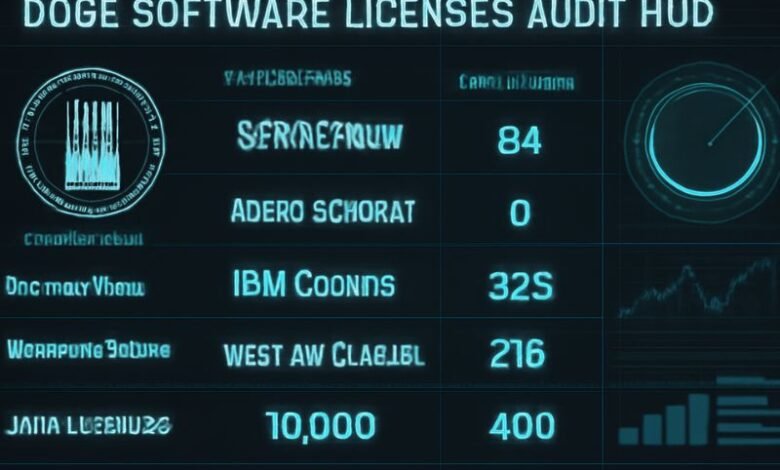
The phrase “DOGE Software Licenses Audit HUD” has quickly become a high-interest topic across the tech, policy, and government-efficiency spaces. It refers to two intertwined narratives:
- The real-world software license audit conducted by the Department of Government Efficiency (DOGE) on the U.S. Department of Housing and Urban Development (HUD), which revealed massive waste in unused and over-purchased software licenses.
- The broader trend of organizations adopting HUD-style (Heads-Up Display) dashboards to manage software licenses, compliance, and IT governance.
This article explores both angles in depth—how the DOGE audit happened, why it matters, and how the concept of a “Software Licenses Audit HUD” is becoming a model for organizations needing real-time visibility into software usage, compliance risk, and cost efficiency.
Understanding the Foundations
What Is DOGE?
The Department of Government Efficiency (DOGE) is a newly established federal oversight entity focused on trimming waste across government agencies. Its mission is centered on auditing, optimizing, and restructuring federal spending, particularly in technology procurement, software licensing, and digital infrastructure.
DOGE emerged in response to long-standing concerns that many federal agencies overspend significantly due to outdated procurement models, poor oversight of software usage, and lack of centralized IT management.
What Is HUD?
The Department of Housing and Urban Development (HUD) is a major federal agency responsible for housing policy, federal housing programs, community development, and homelessness initiatives. As a large federal bureaucracy, HUD operates with thousands of employees and contractors—making its technology footprint massive and complex.
Because of its size and scope, HUD spends millions each year on software licenses, SaaS products, cloud platforms, productivity suites, and analytics tools. Historically, it has also struggled with asset tracking, IT inventory management, and compliance documentation.
The DOGE Audit: What Actually Happened?
Purpose of the Audit
The primary goals of the DOGE software-license audit were:
- Determine how many licenses HUD is paying for.
- Identify active users vs. inactive or unassigned licenses.
- Calculate waste and overspending.
- Improve IT governance and accountability.
- Recommend corrective actions for procurement and renewal cycles.
The audit was initiated after repeated findings by federal watchdogs—such as the GAO—showing that HUD did not maintain proper software asset-management processes.
Key Findings From the Audit
DOGE’s findings were startling. The audit reportedly uncovered:
- 35,000+ ServiceNow licenses with only 84 active users.
- 11,000+ Adobe Acrobat licenses with zero active users.
- 1,700+ IBM Cognos licenses with only 325 active users.
- 800+ WestLaw Classic licenses with 216 active users.
- 10,000+ Java licenses with 400 active users.
These numbers pointed to a major mismatch between what HUD purchased and what HUD actually used.
Why So Much Waste?
The audit highlighted several recurring structural issues:
Lack of Centralized Oversight
HUD’s software purchases were often decentralized across departments. Without a unified procurement system, different divisions renewed licenses independently—even when they didn’t need them.
Legacy Contracts
Some licenses originated from multi-year enterprise agreements that were renewed automatically, sometimes without usage reviews.
Compliance Anxiety
Agencies often over-purchase software out of fear of non-compliance with licensing rules. This leads to “license padding,” where organizations buy far more licenses than needed “just in case.”
Weak Asset Management
Auditors found that HUD lacked a functional, organization-wide IT asset management (ITAM/ITSM) solution. Manual tracking and spreadsheets simply couldn’t keep up with the complexity.
Slow Decommissioning of Tools
Older tools were paid for long after their internal usage had slowed or stopped.
The Public Impact
The audit generated major public attention due to:
- The staggering scale of the waste.
- The implications for taxpayer dollars.
- The broader narrative that federal agencies overspend on technology.
- The renewed interest in modern, automated audit and compliance systems.
This led to the phrase “DOGE Software Licenses Audit HUD” becoming a search trend among analysts, reporters, IT managers, and public-sector innovation groups.
Beyond Government: The Rise of License-Audit HUD Dashboards
While the DOGE-HUD audit acted as a catalyst, the concept of an audit HUD (Heads-Up Display) for software licensing is gaining momentum across the corporate world too.
Organizations are now looking seriously at adopting real-time dashboards that mirror the same principles the audit exposed.
What Is a Software Licenses Audit HUD?
A Software Licenses Audit HUD is a centralized, real-time dashboard that displays:
- All software in use
- Active and inactive licenses
- License expirations and renewal dates
- Compliance risks
- Vendor contract terms
- Cost per department vs. cost per user
- Underutilized or abandoned tools
- Automated alerts for anomalies or inefficiencies
Think of it as a cockpit for license management—giving leadership complete visibility at a glance.
Key Components of an Effective Audit HUD
Real-Time Usage Monitoring
A modern HUD must integrate with authentication logs, SSO tools, device agents, and cloud service dashboards to gather real-time usage metrics.
License Inventory Management
It consolidates licenses from all vendors—whether SaaS, perpetual, subscription-based, or on-prem.
Compliance Rules Engine
The HUD should automatically detect:
- License violations
- Over-assignment
- Under-allocation
- Conflicts (e.g., mixing incompatible open-source licenses)
Forecasting & Cost Optimization
Good HUDs provide:
- Renewal predictions
- Cost-savings recommendations
- Vendor consolidation opportunities
- Buy-justification analytics
Audit Trail Logging
Auditors need to see:
- Who approved what
- When licenses were assigned
- When they were revoked
- What anomalies were detected
Integration Ecosystem
Modern HUD-style tools integrate with:
- CI/CD pipelines
- DevSecOps workflows
- Cloud governance platforms
- Procurement systems
- Identity providers (Okta, Azure AD, etc.)
Why the DOGE-HUD Case Sparked a National Conversation
The Scale of Waste
The DOGE audit didn’t reveal a few hundred dollars in waste—it revealed millions, over multiple years.
Public Trust and Government Transparency
Taxpayers expect agencies to spend money responsibly, especially on widely available commercial software. The audit underscored that modernizing oversight isn’t optional.
The Spillover Effect Into Private Industry
Many organizations have quietly acknowledged that they face similar “license sprawl.” The publicity around HUD’s situation prompted private CIOs and CISOs to revisit their own license governance.
Growing Emphasis on Cybersecurity & Compliance
Unused licenses aren’t just waste—they’re security risks.
Orphaned accounts, forgotten SaaS tools, and unmanaged platforms can lead to:
- Shadow IT
- Unauthorized access
- Data leakage
- Compliance failures
- Higher breach risk
4.5 A Push Toward Automation
HUD’s audit revealed that manual tracking is fundamentally incompatible with modern IT environments. Automation—via HUD-style dashboards—is no longer a luxury.
How Organizations Can Implement Their Own “Audit HUD”
Step 1: Perform a Discovery Scan
Start by identifying:
- Every licensed product
- Every deployment instance
- Every assigned user
- Every dormant license
Step 2: Map User Activity
Use telemetry, login data, and usage analytics to determine real engagement.
Step 3: Build the Dashboard
Your HUD should include:
- License utilization percentages
- Renewal schedules
- Department-level views
- User-level views
- Vendor-spend breakdowns
- Risk scoring
Step 4: Establish Policy Rules
Define rules such as:
- “Revoke licenses unused for 90 days.”
- “Block purchasing unless usage exceeds 85%.”
- “Flag auto-renewals without usage justification.”
Step 5: Automate as Much as Possible
Automate:
- Alerts
- Revocations
- Onboarding assignments
- Reports
- Vendor negotiation summaries
Step 6: Review Quarterly
Regular reviews prevent:
- Renewal bloat
- Department-level overspending
- Compliance drift
This ensures your organization never faces the scale of inefficiency revealed in the DOGE-HUD case.
What the Future Holds for License Governance
AI-Driven Optimization
AI models can predict:
- Future license needs
- Tools likely to be abandoned
- Vendors offering poor ROI
Unified Government Dashboards
Federal agencies may eventually adopt a single government-wide software audit HUD, enabling:
- Cross-agency comparisons
- Centralized procurement
- Volume-based discounts
Regulatory Pressure
After the HUD audit, other agencies are likely to face increased scrutiny and compliance requirements.
Vendor Market Disruption
Software companies may shift their licensing models as customers become more educated and analytical.
Standardization of Transparency
The DOGE audit could spark a national standard for public technology spend reporting.
Conclusion
The phrase “DOGE Software Licenses Audit HUD” represents far more than a single audit—it symbolizes a systemic shift in how organizations view software spending, compliance, and technology governance.
The DOGE audit of HUD exposed the scale of waste that can accumulate when organizations lack visibility and oversight. At the same time, the rise of HUD-style audit dashboards shows how modern tools can transform license management from chaotic guesswork into a data-driven discipline.
Going forward, both government agencies and private companies will need to embrace real-time dashboards, automated audits, and AI-powered analysis to ensure software spending is efficient, secure, and compliant.
FAQs About DOGE Software Licenses Audit HUD
What does “DOGE Software Licenses Audit HUD” actually mean?
It refers to both the DOGE audit of HUD’s software licenses and the emerging trend of license-audit dashboards modeled after that oversight process.
Why was HUD’s software licensing such a big concern?
Because thousands of licenses were paid for but never used, resulting in significant financial inefficiency and potential security risks.
What is an Audit HUD dashboard?
A real-time visual dashboard that displays software usage, license utilization, compliance issues, and cost-optimization opportunities.
How can organizations prevent license waste like HUD’s?
By automating usage tracking, conducting quarterly audits, centralizing procurement, enforcing policy rules, and adopting real-time license management tools.
Does the DOGE audit impact other federal agencies?
Yes. After the public exposure of waste, many agencies are under pressure to conduct similar audits and modernize their software governance systems.